
september 2026
So why are dogs still being commercially moved from Ireland to Great Britain?
There is a question we keep coming back to.
If governments know there are problems with low-welfare breeding, puppy trading and poor traceability, why are dogs still being commercially moved from Ireland to Great Britain?
This isn’t an attack on responsible Irish breeders, and it isn’t a claim that every dog coming from Ireland has been mistreated. It is a question about the system.
And it is a question that matters because of Reggie.
According to figures provided by the Irish Government, 8,768 dogs were commercially exported from Ireland in 2024. These figures don’t mean that all of these dogs were puppies or that the movements were illegal. But they do show that there is a substantial commercial movement of dogs out of Ireland.
So the question isn’t simply, “Is it legal to move the dog?”
We should also be asking, “How well does the system protect the dog?”
Paperwork isn’t the whole story
A puppy can have a microchip, vaccinations, a health certificate and all the required transport paperwork. But that paperwork doesn’t necessarily tell us everything about the puppy’s life.
How many litters has its mother had? What conditions was she living in? Who bred the puppy? Where was it born? Who handled it before it was sold? Who transported it?
And most importantly, can the buyer see the puppy with its biological mother?
A document can show that a requirement has been met. But it cannot show us what a breeding mother’s life was really like.
What about Lucy’s Law?
Lucy’s Law was introduced in England in 2020 and banned commercial third-party sales of puppies and kittens. The idea was to stop puppies being passed through dealers and encourage buyers to deal directly with the breeder or a rescue centre.
It was an important change. But Lucy’s Law was never going to solve every problem connected with puppy farming. It clearly shows right now when monitoring online sales including WhatsApp groups, social media platforms and selling sites.
The UK Government’s own Animal Welfare Strategy now acknowledges that there are still persistent problems with the breeding and sourcing of low-welfare puppies. It also says that traceability in the sector must be improved.
So we have to ask why, after Lucy’s Law, these problems are still with us.
Banning third-party sales does not automatically mean that every breeder is responsible or that every puppy has come from a good environment. It doesn’t tell a buyer everything about the puppy’s background. And it doesn’t remove the need for proper inspections, enforcement and traceability.
That is why Lucy’s Law should not be seen as the end of the fight against puppy farming.
It was a step forward, but nothing has changed really so there is still much more to do.
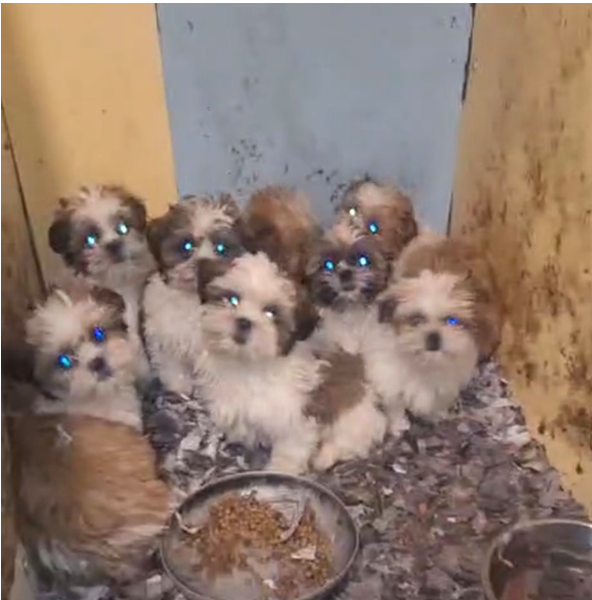
What about dogs coming from Ireland?
This is where the issue becomes even more complicated. Dogs can be commercially moved from Ireland to Great Britain through a legal process involving veterinary checks, certification and transport requirements. But legal movement and good welfare are not necessarily the same thing.
We need to be able to understand where a dog was born, who bred it, where it was raised and who handled it before it reached its new family.
The UK Government has also recognised the problem of low-welfare imports and introduced the Animal Welfare (Import of Dogs, Cats and Ferrets) Act 2025.
So governments clearly recognise that stronger protection is needed.
The question is whether the changes will be strong enough and, just as importantly, whether they will be properly enforced.
Ireland is also proposing change
Ireland is now proposing significant changes to its dog-breeding legislation.
Among the proposals is a ban on third-party puppy sales. Puppies would have to be sold from the premises where they were born and reared, and buyers would have to be able to see the puppy with its biological mother. The proposals also include tighter controls around breeding and stronger enforcement.
These are proposed Government reforms.
And they raise a very simple question: If the existing system was working well enough, why is such significant reform now being proposed?
And what about the mother?
This is the part of puppy farming that is so often invisible.
We see the puppy.
We fall in love with the puppy.
We take the puppy home.
But somewhere behind that puppy is a mother.
What was her life like?
How many times was she bred?
What conditions was she kept in?
What happened when she was no longer profitable?
Every puppy has a mother.
Her welfare matters too.
Then there is Reggie
This is why we keep talking about these issues.
Because Reggie wasn’t an export number.
He wasn’t a microchip.
He wasn’t a piece of paperwork.
He was Reggie.
A dog. A life. A member of a family.
And whatever the paperwork may say, what happened to Reggie leaves us asking whether the systems designed to protect dogs are actually strong enough. We often hear:
“But it was legal.”
But legal is only a minimum standard.
What we want to see
Justice for Reggie is calling for buyers to be able to see the biological mother and where the puppy was born and raised.
We want an end to third-party puppy sales, full traceability from breeder to buyer, transparent breeding records, properly resourced inspections and effective enforcement.
We also want better cooperation and information sharing between Ireland and Great Britain, particularly where dogs are being commercially moved between the two countries.
Most of all, welfare must come before profit.
Reggie deserved better.
Ireland is proposing changes.
Britain has introduced new legislation.
And the UK Government itself acknowledges that problems with low-welfare breeding, sourcing and traceability remain.
Now we need to make sure the changes actually work. Because passing a law is one thing.
Making sure that law protects animals in the real world is another.
Reggie deserved better.
Every breeding mother deserves better.
Every puppy deserves better.
Justice for Reggie.
The next puppy should not have to become a campaign before someone protects it.
Sources:
Irish Government — Dog breeding and welfare reforms, 2026.
Irish Parliament — Commercial dog export figures, 2020–2024. UK Government
Animal Welfare Strategy for England. UK Government — Lucy’s Law.
UK Government — Animal Welfare (Import of Dogs, Cats and Ferrets) Act 2025.